


Trust litigation covers legal disputes over a trust’s validity, meaning, or administration. In New Jersey, common cases include trust contests based on undue influence or incapacity, disputes over accountings and distributions, requests to interpret unclear terms, and petitions to remove a trustee.
Many disputes settle, but the Superior Court, Chancery Division, Probate Part, resolves those that do not. Patrick Banks Law represents Bergen County beneficiaries and trustees in these matters.
Trusts are supposed to make things easier for families. When questions arise about how a trust was created, what it means, or how it is managed, it can become a source of deep conflict.
Trust disputes are different from probate fights. They often involve private documents, long-running relationships, and trustees who may serve for decades. This page explains the most common types of trust disputes in New Jersey and how they are resolved. For an overview of all types of inheritance disputes, visit our Bergen County estate litigation page.
What Is Trust Litigation?
Trust litigation is any court proceeding involving a trust. The parties are usually beneficiaries, trustees, or both. Other family members or creditors may also be involved.
Trust disputes generally fall into two broad categories. Some challenge the trust itself, such as whether a late-life amendment is valid. Others accept the trust as valid but challenge how it is being interpreted or administered.
The distinction matters because each type of claim has different evidence, deadlines, and possible outcomes.
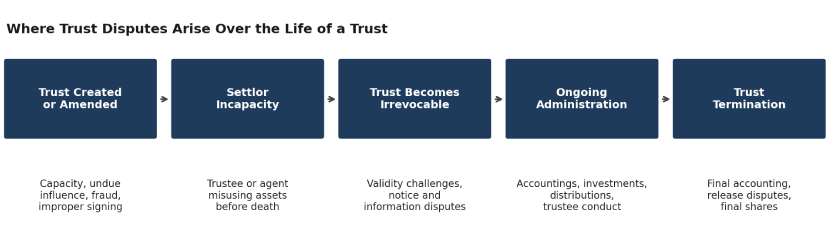
Common Types of Trust Disputes
| Type of Dispute | The Core Question | Possible Outcomes |
|---|---|---|
| Trust contest | Is the trust or amendment valid? | The trust or amendment is upheld, or set aside in whole or in part |
| Construction action | What do the trust terms actually mean? | The court interprets unclear language and instructs the trustee |
| Accounting dispute | Has the trustee properly reported what came in and went out? | A formal accounting, rulings on exceptions, possible surcharge |
| Distribution dispute | Is the trustee using discretion properly and fairly? | Direction to the trustee, a required distribution, or no change |
| Trustee removal | Should this trustee continue to serve? | Removal and appointment of a successor, or the trustee stays |
| Modification or termination | Should the trust be changed or ended? | Court-approved or agreed changes, or the trust continues as written |
Trust Contests
A trust contest argues that a trust, or an amendment to it, should not be enforced. Because many families now use revocable living trusts in place of wills, trust contests have become as important as traditional will contests.
The grounds for challenging a trust are similar to those for challenging a will:
- Lack of capacity. The settlor did not understand the nature and extent of their property, the people who would naturally inherit, or the effect of the document when signing.
- Undue influence. Someone in a position of trust pressured the settlor into terms that reflected that person’s wishes rather than the settlor’s.
- Fraud or forgery. The settlor was deceived about what they were signing, or the signature is not genuine.
- Improper execution. The document or amendment was not signed as required.
Undue influence claims are especially common when a caregiver or one child helped arrange a late amendment that sharply changed the plan. Our page on undue influence explains how New Jersey courts evaluate these claims, including when the burden shifts to the person who benefited. If the dispute involves a will rather than a trust, see our guide to will contests.
Construction and Interpretation Disputes
Sometimes no one is accused of wrongdoing. The trust language is simply unclear, outdated, or silent on a situation the settlor never anticipated.
For example, a trust may leave assets to “my children” without addressing a stepchild, or may refer to an account that no longer exists. In these cases, the trustee or a beneficiary can ask the court to interpret the document and instruct the trustee on how to proceed. Courts try to determine the settlor’s intent using the trust’s language and, in some cases, other evidence.
Accounting and Information Disputes
Beneficiaries cannot protect their interests without information. New Jersey’s trust code generally requires trustees to keep qualified beneficiaries reasonably informed and to provide reports about trust property, liabilities, receipts, and disbursements.
When a trustee refuses to share records or provides an incomplete picture, a beneficiary can ask the court to compel a formal accounting. Beneficiaries may then file exceptions challenging specific transactions.
Accounting disputes frequently reveal more serious problems. When they do, a claim for breach of fiduciary duty may follow.
Distribution Disputes
Many trusts give the trustee discretion over when and how much to distribute, such as distributions for a beneficiary’s health, education, maintenance, and support. Discretion is not unlimited. A trustee must exercise it in good faith and in line with the trust’s purposes.
Disputes arise when a beneficiary believes the trustee is unreasonably stingy, favors other beneficiaries, or uses the power to punish or control. Trustees, in turn, may face pressure from beneficiaries who want more than the trust allows.
Trustee Removal Disputes
New Jersey courts can remove a trustee in appropriate circumstances. Common grounds include a serious breach of trust, unfitness, persistent failure to administer the trust effectively, or co-trustees who cannot work together to the point that it harms the trust.
Removal is a significant step, and courts consider whether it serves the beneficiaries’ interests. In some cases, a substantial change in circumstances or a request by all qualified beneficiaries can also support removal.
Modification and Termination Disputes
Circumstances change. A trust written decades ago may no longer fit the family, the tax laws, or the size of the assets. New Jersey law allows trusts to be modified or terminated in some situations, either by agreement or with court approval.
Disagreements arise when some beneficiaries want to change or end a trust and others want it to continue as written.

Family Situations That Often Lead to Trust Disputes
Certain family situations make trust disputes more likely. Recognizing them early can help trustees and beneficiaries plan ahead.
- One sibling as trustee. When a parent names one child to manage a trust for all of the children, even careful decisions can look like favoritism to the others.
- Blended families. A trust that supports a surviving spouse for life and then passes to children from an earlier marriage can put the spouse and the children at odds over investments and distributions.
- Late-life changes. Amendments signed during a long illness, or shortly after a new relationship began, often draw scrutiny from family members who were left with less.
- Family businesses and real estate. Assets that are hard to divide, such as a shore house or a closely held company, frequently lead to disagreements over whether to sell, keep, or buy out.
None of these situations automatically means something went wrong. They do mean that clear communication and good records are especially important.
How Trust Disputes Are Resolved in New Jersey
Most trust disputes do not begin in a courtroom. They begin with a question, a delayed distribution, or a refusal to share information.
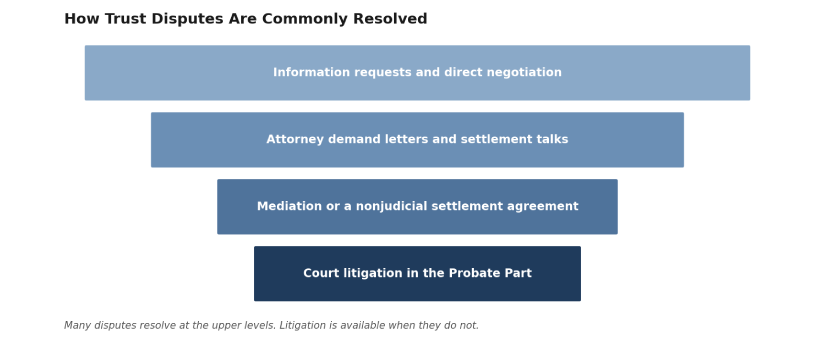
New Jersey’s trust code allows interested persons to enter into nonjudicial settlement agreements on many trust matters. These agreements can resolve issues such as interpreting terms, approving a trustee’s report, or appointing a new trustee, without a court order, as long as they do not violate a material purpose of the trust.
When a dispute cannot be resolved privately, the case is typically filed in the Superior Court, Chancery Division, Probate Part, by verified complaint and order to show cause. For Bergen County trusts, these matters are heard in Hackensack. Probate Part proceedings are often summary in nature, which can move faster than ordinary civil litigation.
Evidence That Matters in Trust Litigation
The outcome of a trust dispute usually depends on documents and testimony gathered early. Important evidence can include:
- Every version of the trust and its amendments, along with the drafting attorney’s file
- Medical records showing the settlor’s condition when documents were signed
- Bank and brokerage statements for the trust and the settlor
- Emails, texts, and letters between the settlor, family members, and caregivers
- Testimony from witnesses, the drafting attorney, and treating physicians
- The trustee’s records of receipts, expenses, investments, and distributions
Because memories fade and records can be lost, acting promptly strengthens any trust claim or defense.
Deadlines and No-Contest Clauses
Time limits in trust disputes vary depending on the type of claim and the facts. Deadlines to contest a trust that was revocable at the settlor’s death can be short, and a trustee’s notice or report to beneficiaries can start or shorten certain time periods.
Some trusts include a no-contest clause, which attempts to disinherit a beneficiary who challenges the document. New Jersey courts generally will not enforce these clauses when the challenger had probable cause to bring the claim. Even so, the clause is an important factor to evaluate before filing.
Signing a release or refunding agreement at the end of a trust can also limit your ability to raise objections later. Read these documents carefully before signing.


Representing Trustees in Disputes
Trustees are often caught in the middle. They must follow the trust terms even when some beneficiaries are unhappy, and they can be sued for decisions made in good faith.
A trustee facing a dispute can ask the court for instructions, submit an accounting for court approval, or seek to resolve the matter through a nonjudicial settlement agreement. These steps can protect a trustee who is doing the job correctly.
Good records and regular communication with beneficiaries are the best defense. Our page on trust administration explains what trustees are expected to do from the start.
Preventing Trust Disputes Before They Start
Many trust disputes can be avoided with thoughtful planning. Clear drafting, careful selection of trustees, documented capacity when amendments are signed, and honest conversations with family members all reduce the risk of conflict later.
If you are creating or updating your own plan, our revocable trust page and our broader estate planning guide explain how to build a trust that is easier for your family to administer.
Involved in a trust dispute in Bergen County? Attorney Patrick V. Banks has represented Bergen County families in estate and trust matters since 2007. Call 201-483-2338 to schedule your free initial consultation.
Frequently Asked Questions About Trust Litigation in New Jersey
What Happens When You Call Patrick Banks Law
When you call 201-483-2338, you will be asked to complete a short questionnaire about the trust, your role, and the concerns you have.
Attorney Banks then reviews your situation, including any trust documents or statements you already have. Most calls end with a clear next step and a written fee quote.
Protect Your Rights in a Trust Dispute
Whether you are a beneficiary who has been shut out or a trustee trying to do the right thing under pressure, early legal guidance makes trust disputes easier to manage. Patrick Banks Law represents clients in Ridgewood, Upper Saddle River, and throughout Bergen County.
Call 201-483-2338 or complete our online questionnaire to schedule your free initial consultation.
